Showing posts with label Test garden. Show all posts

Thursday, August 11, 2022

A Interlude/ Update

Welcome back to the Lost In the Farmer’s Market Blog.  I bet you are wondering why there have not been any posts in a few weeks. Well there was a frenzy of re-shoots for the Youtube channel. You see one of our viewers pointed out the sound quality on our videos was not so great and to be honest it wasn’t. They suggested using a Lavelier microphone to fix the issue but as I discovered our camera was not compatible with that. So short of buying a new camera that is, I had to figure out a solution and keep at least the video quality while doing it. The problem was resolved in a dumb sort of way, using my smartphone and an existing headphone based microphone, but that posed a new problem, stabilizing the image because I had no way to mount the phone on the tripod. That was fixed by buying a new attachment to make it work and then…the march of the re-shoots began. About twenty five videos were re-shoot at a breakneck pace around my work schedule and the needs of the test garden and all the agriculture stuff that’s part of my normal routine. Boy, you never realize how many bloopers there are until you cram a lot of filming in a short amount of time. For instance, there were about twenty three botched filmings before I got it right for the Zinnia video you can see at the link below.


Zinnias!


          I was trying so hard to channel the intense calm of David Attenborough and all of the forces of the universe were totally trying to wreck my efforts. Ruinations of the filing included the neighbor’s dogs going nuts, Mosquito attacks, trying to say hydrated (it was HOT that day) and some mow, blow and, go guys next door being really loud and hilariously vulgar. You see, I am dedicated to producing at least Fifty-two episodes per year. That’s one per week on average plus a bit of bonus content in the form of interludes and the occasional field video. We started late this year, and well we are now at episode 28, and we are at week 32 of the year so next week expect four episodes and we will be give or take caught up and back on track. Thankfully all of the next fourteen episodes were filmed in that mad rush to both keep up, fix the audio issue and get ahead of the curve so things are not so frantic.


          Don’t worry, I have some content for you before we get back to the talk of forage foods, here are pictures of from just after Garden Tour this year there is also a video too which is a first in test garden history.


The Zinnias were exploding with color this year, not bad for a native plant.

Here we are in the 'Fig Orchard' these are Brown Turkey, Black Mission and Celeste figs.

This is the Memorial Garden. It's not as nice as it used to be and that really comes down to picking the wrong flowers for the site.

Zinnias were exploding with blooms at the time of the event.


Next to the Zinnias are the Okra and Peppers.


There are two Red Burgundy and Baby Bubba Okra out here.


Here is a closeup of a Red Burgundy Okra Pod and it's bloom.

Fayetteville Inferno Peppers are no joke!

 
Hoan Ngoc plants are growing aggressively.


Here is the "Exotic" bed, and the very Hibiscus that used to drive my neighbor nuts.

A close up of the Hibiscus coccineus 'Texas Star' leaves that look oddly like a certain illegal plant.


Here's a look at a very vigorous Thai Mint plant


Here's the vegetable garden, the tomatoes are not doing so good for some reason this year.


In the middle of this bed between two very healthy Oregano plants is a Kadota Fig. The potted plant is an Agapanthus.

It's the Afghan fig and boy does it look good!


The Compass bed look pretty good I think, though the bird bath is occasionally commandeered by Caliente as her own extra large water dish.

This area was reclaimed this year. Normally I do not use weed block, but the soil below has intrusion by Tree of heaven and this is the only good way to put an end to that.


I did this short video panorama of the test gardens; it helps put all the pictures in perspective.


With all that garden goodness covered this is the part of the blog where I have to advertise for the Fayetteville City Market. Now I know you readers probably don’t much like advertisements, but by booth at the City Market helps to cover the costs of running the test garden and literally maintains the Research & Development budget that is used to bring you the information that has made up the backbone of this blog.  In addition to being able to process card payments we now take CashApp payments so your payment options for my product have tripled. With that said; if you want to get some GMO-free, Organic fruit, herbs, flowers and perennials, come on down to the Fayetteville City Market on 325 Maxwell Street in downtown Fayetteville between the Hours of 9:00 am and 1:00 pm on Saturdays. Even in bad weather the market goes on though you might have to look for me under the ‘arches’ of the Transportation Museum’s front entryway.


For those of you wondering what plants are going to be at the market this weekend here is the list.


Fresh Produce:

Pepper, Lemon Drop

Pepper, Fayetteville Inferno

Pepper, Sweet Heat

Figs, Assortment (White Ischia, Magnolia Chicago Hardy, Celeste)


Garden Stuff: ($3.00)

Cilantro – Vietnamese

Cuban Oregano – Cervesa & Lime

Fennel – Black

Hoan Ngoc

Parsley - Curled

Sage – Pineapple

Sage – Common


Angelonia – Serenita Raspberry

Coleus – Kong Lime

Cuphea – Siracha Rose

Milkweed – Orange blooming


Coming Soon:

Thai Mint

Cold-Season Crops


How to stay in Contact with Us!


Our group’s online presence has migrated to Nextdoor.com. All you need to keep up with all our activities is to have a Nextdoor account and to look for the ‘Sustainable Neighbors of Fayetteville’ group and ask to join! You don’t have to live in Fayetteville to join us! Feel free to ask all your garden questions of our knowledgeable membership and post your cool garden pictures.


Sustainable Neighbors of Fayetteville


Also please take a gander at the Youtube version of this blog:

The Videos: Look Here

>Newest videos (8): Mexican Tarragon, Cucumber, Purselane, Moss Rose, Petunia, Scarlet Sage, Impatiens, Geraniums, Castor Bean Interlude.


Meetings still going on! We now meet at LeClair’s General Store on the First and Third Thursday of every month. Our next meeting is on August 18th between 5:30pm and 7:00pm. We are in the back room so come on in and join us for a fun garden chat.

Thursday, November 7, 2013

And so Autumn came...maybe?


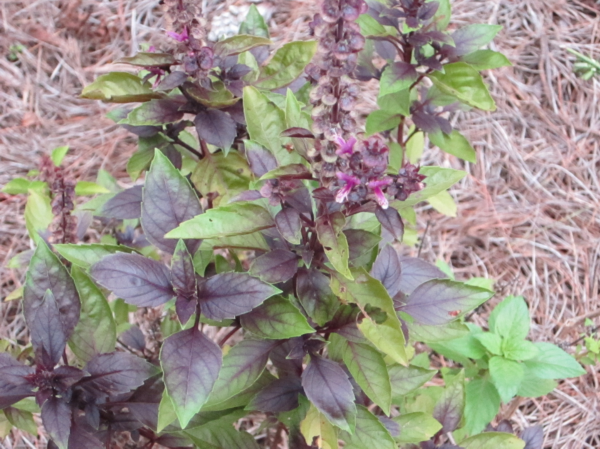
Welcome back to Lost In the Farmer’s Market. This is a replacement episode, to cover the lack of a post last week. As some of you have heard I am enrolled at NC A&T and at times the requirement to write large papers eats up time or drains my ability to write much else due to deadlines. That said I had to write a few papers with due dates all falling in the same week so the post just never made it up here. Without further delay today’s topic is all about the basils that were included in the test gardens this year.

Now honestly I can’t say a single basil specimen failed this year as all of them did well and some from last year even returned from seed which is a double bonus. However a few species did outshine the rest and they deserve special note. So let’s start with the list of basil species and their relative performance.


Blue African Basil

‘BAB’ is probably one of my long-standing favorites as I grew it every year when the test garden was in New Jersey. As far as flavor, BAB has more of a anise-camphor flavor making it good for a finishing flavor-garnish. But more so BAB pesto is quite the flavor experience with reduced amounts of garlic and extra parmesan or romano grated cheese. But best thing about BAB is the blue-purple leaf variations and the sheer amount of nectar producing blooms which can help feed a large number of pollinators and humming birds. Lastly the plant is drought tough once established and should be deemed a tender perennial in some circumstances. In short blue African basil was the largest basil in the garden at the end of the growing season.


Genovese Sweet Basil

GSB is one of those sweet basil hybrids with such good all-around characteristics that it flatly replaces normal basil and typical large leaf sweet basil for pesto and seasoning use. The two specimens in the garden grew to about two feet tall not counting flower spikes in large quart nursery pots and produced ample amounts of leaves for culinary use. I would easily declare this selection the best sweet basil I’ve grown to date due to its tolerant habits and more so by the end of the season it had sown its seed itself in other pots so its seedlings were brought in last month and repotted for next year. You can get this species from Botanical Interests as GMO-free seed for about two dollars.


Pesto Purpetuo Basil

PPB was the test species this year. I picked it because it’s a species that does not flower and is apparently a cross between Ocimum basilicum and O. citriodorum. The plants are upright, and roughly column shaped and bear smaller leaves that have white variegation. They suffered no disease issues and grew to an overall height of about three feet when planted in the ground without regular irrigation. In terms of flavor it was more like a plain basil with just a touch of anise making it pleasant for general use. I would plant mor of this in a heartbeat next year but certainly not more than the actual flowering types.


Red Rubin Basil

Red Rubin is an heirloom classic, as one of the earliest ‘red-purple’ basil types it does not hold color in supper heat or full sun but does have all the sweet basil flavor with additional foliage color. The most interesting trait of this basil is it’s habit for randomly reverting to a normal green color in unpredictable ways. One branch might go straight green while another might have purple freckles on green or   some odd half & half mix. Sometimes the leaves are intense purple and other times they are this violet-red color but all in all it is still a nice basil and worth growing just for what it might do and for making some downright unruly pesto!


Thai Basil

Sometimes called Siam Thai Queen Basil under cultivation Thai basil has a strong anise-flavor that is non-bitter. The leaves are tinted where they meet stems with a deep red and the stems themselves also retain the color. Overall the plants are self-heading as they reach a height, flower and stop getting any taller. Fortunately Thai basil is drought immune once established and provides nectar to pollinators making it very worthwhile to grow. I first encountered this species in Canada back in the 90’s when it had just been introduced to garden centers and have grown it at every opportunity since. It’s a yearly regular much like blue African and will continue to be so. I might add Siam seedlings volunteered in the garden this year so, double bonus for the plant being self-sown.


But enough about basil, this week end as with every Saturday until I run out of plants or Sustainable neighbors stops maintaining a table at the market I will be at the Fayetteville City/Farmers market on Saturday. The Fayetteville farmer’s market is located at 325 Franklin Street on the property of the Fayetteville transportation museum. The market runs between the hours 9:00 am and 1:00 pm and you can find my both over by the art studio side of the market. As always the plant list for this week is below:

Perennials:
7x Spineless Prickly Pear

Salad & Fixings:
3x Black Seeded Simpson Lettuce
2x Cilantro

Cole Crops:
3x Georgia Collards
6x Morris Heading Cabbage-Collards
3x Stonehead Cabbage
3x Charleston Wakefeild Cabbage
3x Jersey Early Wakefeild Cabbage
2x Savoy Cabbage
3x Mustard-Spinach ‘Senposai’
3x Napa Cabbage

Available Soon:
00x Swiss Chard

This of course concludes this belated post that was due last week. The plant list above is current and the post intended for this week will be posted on Sunday. Remember folks, if the weather holds you can still get plants in the ground as late as the end of November with no ill effects. That aside we have a good three weeks of safe planting time roughly to fill those beds with winter crops so don’t delay get those plants in today!

Rain report
Last Week: Average Precipitation of 0.7 inches.
This Week: Average precipitation of 0.2 inches.

As always folks, Keep ‘em growing!

Friday, October 4, 2013

Early Results Part 1


Welcome back to another episode of Lost in the Farmer’s market. Today’s post is going to be a short one regarding some of the successes and failures of this year’s trials. The final results of course won’t be in until December but, for the summer seasonal section, I can already talk about how well things went.  For those not familiar with the test gardens the warm season plantings are comprised of a few primary crops the majority of which are concentrated in the night shade family. This means Tomatoes, Peppers, Eggplant, Potatoes, ground cherry, tomatillos and so on. So let’s take a look at the things grown in order and how they did. This week I’m covering the Tomato crop in detail.

Tomatoes:
            Amana Orange
            Beef Steak
            Brown Berry
            Currant, Gold Rush
            Currant, Red


            Currant, Sweet Pea    
            Currant, Yellow 
            Mexico Midget
Paul Robeson
            Purple Calabash
            Reisotomate
            Roma
            San Marzano
            Silvery Fir Tree
            Solar Fire

For note the criteria used to judge the success or failure of a tomato or any other plant relates to how well it produces, how it handles drought, pests and, its growth rate. So of course the best of for 2013 was Red Currant, Mexico Midget, Brown Berry, Paul Robeson, Reisotomate, San Marzano and, Underground railroad. These six tomato varieties out lasted the rest and are worth considering for next year.

Red Currant
RC is a yearly staple in the test gardens for the fact its tiny pea sized fruit are numerous enough that even the birds can’t impact the crop. The plant dislpays a heavily branching habit that allows it to takeover large sections of the reinforced mound bed in the best of conditions. This year it produced well but was crippled by the three or four weeks of rain we had in mid-summer and never quite recovered.

Still producing regardless of the weather, MM did well with a slight sputtering back in june. Super vigorous!

Mexico Midget
I admit this variety was selected entirely at random and I had no idea what I was getting. However this one was planted in a 14” pot and given the same treatment as URR, PR and reisotomate and it did not disappoint. Mexican Midget produced regular bright red fruits that were a bit smaller then cherry size. The scrambling vines were easy to handle and when being twined about the cage virtually no breakage occurred. Granted the plants never looked very pretty the glut of fruit they produced made their appearance trivial. Expect this to be back next year.

Brownberry has this brown flecking pattern to it's fruit that is quite beautiful, the tomatoes produced are worth it  for cooking too.

Brown Berry
BB was tested last year initially and brought into production this year. Known for its cherry sized fruit that are gorgeously streaked with brown this tomato really showed how tough it was this year. I plated this one in the same bed with the kiwanos and it was the surviving tomato after the Kiwanos choked out the other. Even despite the competition BB reliably produced even under brief drought and constant wetness.

The picture does the sheer size of this Paul Robeson tomato no justice It's big enough to fill my hand and may be nearing a pound in weight! The legend of NJ tomatoes being the best and largest has just been debunked!

Paul Robeson
With a name like that you already expect great things and boy did this selection not disappoint. PR too a bit to get going but once it began fruiting it well still hasn’t stopped. The vines scrambled over the case and are not in the cage of the Underground Railroad tomato and likewise URR is in the Paul Robeson cage. PR produced fruit ranging from 4 ounces up but the largest average is 6.5 ounces though larger Fruit is still on the vine. PR is a keeper and will be back next year.

Reisotomate is late to yeild but persistent once it gets going the fruit are incredibly irregular but great tasting.

Reisotomate
Reisotomate was purchased as novelty item, as an oddity to beat all oddities in the category of tomato. What I did not know is that it doesn’t try to fruit until august but once it starts it keeps pumping out fruit. Indeed the deformed fruit have been so random that at certain angles the vines look like they’ve got little green pumpkins on them. The flavor is good and this one will likely return for next year’s test garden.

San Marzano
SM was introduced by sustainable neighbors, and honestly even in adverse conditions the vines did quite well. As far as pate tomatoes go it has a good history and the germination rate was very high. The plants suffered the same fate as the Red currant tomatoes when the brief ‘monsoon’ season happened and never quite recovered. The fruit it did produce were quite good and a number were frozen for winter use. I will be bringing this back next year.

Ant Lou's Underground Rail Road produced with no regularity but the fruits it did produce were quite nice.

Underground Railroad
As far as the three African American heritage varieties go URR did fantastic. As noted in the Paul Robeson section URR’s vigorous vines grew into the Paul Robeson tomato cage and the two are no inseparable. I literally have to follow the vine to its roots to figure which plant is which. Fruit has come at regular intervals and the plant has not had a single disease or pest problem. I would bring this back for sure next year.

With the varieties covered, I have to say that I confirmed one critical factor this year; tomatoes do their best in pots in the North Carolina environment. Two out of three of the listed plants were planted in beds and didn’t reach their full potential due to competition or the weather. I also suspect that being in a pot allowed the soil to fully drain as opposed to being in the ground where constant rain meant that the roots may have sat in a pool of water. There’s a bit more data to collect on this experiment however you can expect to see it up here in detail later on in the year. Next week I’ll talk about the peppers and what was tried and what succeded.

Garden topics aside, as some of you might already know I operate a booth down at the Fayetteville Farmers/City market. The market is open on Saturdays from 9:00 am through 1:00 pm and is located on 325 Franklin Street which is also the location of the Fayetteville Transportation Museum. There is no shortage of parking nearby and it’s a good chance to chat with the folks that actually grow the food. This week’s plant list contains the following.

House Plants:
4x Life Saver Cactus
4x Silver Aloe
1x Sunset Aloe

Salad & Fixings:
4x Romaine Lettuce
4x Black-Seeded Simpson Lettuce (bibb type)
1x Radicchio (more coming soon)

Cole Crops:
5x Georgia Collards
5x Morris Heading Cabbage-Collards
3x Savoy Cabbage
3x Mustard-Spinach ‘Senposai’
6x Dinosaur Kale
4x Napa Cabbage

Next week
4x Spear Sanseveria (Houseplant)
4x Sangria Pepper (Ornamental)
3x Litchi Tomato

Available Soon:
2x Blushing Philodendron
12x Spineless Prickly pear
??x Japanese Red Giant Mustard


Well this brings to a close the first post of October; the clock is ticking folks on getting those cold season plants in the ground. We’ve got perhaps six or so weeks before the first of frosts is liable to strike so if you’ve not considered fall planting you may want to. If you’ve got questions about where and what to plant feel free to contact me through this blog or in person at the market. As always folks keep ‘em growing!