Showing posts with label Henbit. Show all posts

Friday, January 31, 2025

Henbit II

 Note from the Author: This is an update on a weed I’ve covered a few times with the earliest mention being in 201, then 2015, 2020 and then in the earliest format of the weed files on March 4th 2022. This go around all information is getting updated and you will have a far superior edible weed file to look at with more pictures.


In the garden, chances are you will find established clumps of henbit hiding under shrubs.

Here is a closeup of the leaf and the flower head. Note how up close to the flower the leaves have no petioles.

This one is just busting out all over! This may be a singular plant or several growing together really well.

Henbit is no stranger to jailbreaks, this one refuses to be governed by the oppressive raised bed stone work.


Common Name: Henbit


Other Common Names: Deadnettle, Greater Henbit, Henbit Dead-Nettle,


Botanical Family: Lamiaceae (The Mint Family)


Botanical Latin Name: Lamium amplexcaule


Description & Habitat: Henbit in the urban environment is commonly found in lawns, yards, potted plants, and any place where there is decent but moist soil. It is a cool-season annual weed that falls apart by late spring unless it is growing in a shady spot where to does not overheat or dry out. Henbit has opposite pairs of leaves on square stems that have petioles near the base of the plant but leaves have less petiole the longer the stem is. Often near the flowering tops leaves will fully clasp the stem. Leaves will have an irregular margin that looks as if it’s been pecked leading to the name Henbit. Chickens prefer this plant as a food source so it can be valuable in providing forage greens for them in the winter and spring. Henbit is also quite useful in preventing erosion and providing nectar and pollen to bees early in the year before a lot of other plants are actively growing. The purple flowers of this plant are quite pretty and can give a lawn area a neat purple haze.


When & What to Harvest:  The leaves, stems and flowers are all equally edible raw or cooked, but try to harvest early or they might get a little bit fibrous.


Non-Dangerous Lookalikes: It can sometimes be mistaken for Ground Ivy (Glechoma hederacea) which is in the minty family and also edible.


Edible Related Plants: Purple Archangel (Lamium purpureum) or Yellow Archangel (L. galebdolon)


Similar Dangerous Species:  None are known.


Recipe:  


Curried Henbit*

4 Cups of Henbit foliage tightly packed.

3 Tablespoons of butter

1 Teaspoon Curry Powder (the basic brown type)

2 Whole Cloves

¼ Teaspoon Cinnamon

2 Tablespoons of Flour

1 Cup of Sour Cream


Directions

1. Wash the greens thoroughly with warm water; keep an eye out for foreign debris and dirt.

2. Chop the greens finely and add to a Saucepan and cover the greens with water.

3. Boil the greens for about 10 minutes or until they are soft enough for your preference.

4. Separately melt the butter.

5. Add the Curry powder, Cloves and Cinnamon to the melted Butter.

6. Stir the Flour into the butter mixture and stir until smooth and sauce-like.

7. Add ½ cup of water from the cooked greens to the butter mixture and stir until blended.

8. Drain the remaining fluid from the cooked greens and add the greens to the butter mixture.

9. Add the Sour Cream and stir until the consistency is even.

10. Simmer to cook off extra moisture (no more than 15 minutes)

11. Serve over Basmati rice, with baked chicken breasts.


*This recipe is based off the one found in Field Guide To North American Edible Wild Plants’ by Thomas S. Elias and Peter A. Dykeman. On page 116.


Additional Information: (If applicable)

https://crops.extension.iastate.edu/encyclopedia/henbit


Where to get seed or Bare Root Plants:

I was unable to locate a source for this plant’s seeds.


With all that garden goodness covered this is the part of the blog where I have to advertise for the Fayetteville City Market. Now I know you readers probably don’t much like advertisements, but my booth at the City Market helps to cover the costs of running the test garden and literally maintains the Research & Development budget that is used to bring you the information that has made up the backbone of this blog.  In addition to being able to process card payments we now take CashApp payments so your payment options for my product have tripled. With that said; if you want to get some GMO-free, Organic fruit, herbs, flowers and perennials, come on down to the Fayetteville City Market on 325 Maxwell Street in downtown Fayetteville between the hours of 9:00 am and 1:00 pm on Saturdays. Even in bad weather the market goes on though you might have to look for me under the ‘arches’ of the Transportation Museum’s front entryway.


For those of you wondering what plants are going to be at the market this weekend here is the list.


Fresh Foods:

Soup Kit – Parsnip

Soup Kit – Turnip

Turnips

Parsnips

Onions

Celery

Potatoes

Garlic Bulbs

Oyster Mushrooms


Soil Amendment Products:

Carolina Gold, Live Mushroom Compost – 18 Gallon Tote*

Carolina Gold, Live Mushroom Compost – 3 Gallon Bag

Carolina Gold, Live Mushroom Compost – 1 Gallon Bag

Carolina Gold, Enhanced Potting Soil – 1 Gallon Bag


Houseplants:

Abutilon

Aloe, American

Begonia, Sindbad

Cuban Oregano, Large Leaf

Hoan Ngoc

Pothos, Cebu Blue

Rose Campion

Selaginella

Solanum uleanum

Sorrel, Raspberry Dressing

Swiss Cheese Plant


*The 18 gallon tote is by special order only and is delivered to any address within the Fayetteville city area.


How to stay in Contact with Us!

All you need to keep up with all our activities is to have a Nextdoor account and to look for the ‘Sustainable Neighbors of Fayetteville’ group and ask to join! You don’t have to live in Fayetteville to join us! Feel free to ask all your garden questions of our knowledgeable membership and post your cool garden pictures.


Sustainable Neighbors of Fayetteville


Also please take a gander at the YouTube version of this blog:

The Videos: Look Here

>Newest videos (1): Winter 2025


Meetings are still going on! Our next (unofficial) meeting is January 25th at the Fayetteville City Market at 325 Franklin Street between 9:00 am and 1:00 pm.


Chickweed is a cool season annual herb that is native to Eurasia and North Africa but has naturalized in North America. Most garden guides and or lawn care manuals consider it a weed which is a bit ridiculous since it falls apart when the temperatures rise in late spring or early summer. Chickweed reproduces mainly by seed and will reappear in outdoor potted plants year after year if given the chance. However Chickweed can reproduce vegetatively by rooting at the stem nodes where they contact soil. Chickweed originally gets its name because it was and still is used as a food source for Chickens who prefer it over other wild greens. In the urban landscape you will find it growing in with lawns, in pots or containers and it may appear under shrubs, between the cracks in cement and almost anywhere there is reasonably good moist soil. Chickweed is also called Starweed because of its five deeply divided petals making its tiny white flowers look a lot like little white stars. Chickweed has teardrop to elliptical shaped leaves in opposite configuration. This plant also has a very shallow root system does not form tubers and whole plants can be easily harvested. If you are planning to grow this plant know that it responds to fertilizer with extra lush leafy growth and you can treat it as a cut and come again sort of wild green. Although the NC Invasive Plant council calls this plant invasive it is easily controlled and will die if you shake an herbicide label in its general direction.

Friday, February 23, 2024

A Profile of Winter Weeds

     Welcome to the 2024 edition of the LITFM blog.  This blog is the text-based complement to my weekly posts on Nextdoor.com and the gardening channel on YouTube. In 2023, this blog took on a more formal instructional tone with jokes dispersed within to serve as a hub for conveying information that might not work in a video or weekly update format. The subject matter here is always the wide variety of plant-based foods that you can find growing around you in nature or as some call it ‘Forage Foods’. This ties in with local bartering, and indirectly now we will be including mycology. The primary reason for the change in the blog’s tone and topic came about due to the events of the pandemic, the resulting economic turmoil and other factors. The reality is that we are surrounded with perfectly edible plants that can fill at least some of the void in our dietary needs. There is no reason not to be educated in what is and is not safe and how to prepare it into a nutritious meal. With that said I also realized that in my own way by keeping this blog running I might be butting heads with a billion-dollar pesticide/herbicide/fertilizer industry at times. It has always been in the interest of that industry to label certain things ‘weeds’ so they can sell you product that as time goes by we find out is worse for your health than the weeds are. Coupled with an Agricultural-Education system that peddles the myths of the industry and the old myth that if you can afford a nice lawn you must have wealth we have a population that has been fooled for a long time. So, here we are in 2024, and the forage foods series will continue. I hope all of you who read this blog find the information useful or at least thought provoking. The ‘weeds’ I am listing a certainly found in Zone 8A in North Carolina and should certainly be easy to find in the Southeast regions of America.  Thank you for sticking with LITFM and stay tuned for a year of forage foods.


    In today’s blog post I’m going to do something a bit different.  Think of it as a recap of sorts because spring is nearby and I know the uptick in questions about a certain batch of weeds is coming. Today I will be briefly covering a number of edible weeds that I have photographed in the field over the last two weeks and each will get a little write-up so you know the differences between them and what they can be used for. Next week this blog will be back on schedule covering the next forage weed ‘Common Evening Primrose’.


This is Field Sorrel, (Rumex acetosella), it is also known as Sheep's Sorrel or Red Sorrel. This is the wild equivalent to the French Sorrel you may see in the produce aisle at the supermarket. It's foliage can be quite tart especially if you wait too long to harvest it.

Here is a Common Dandelion (Taraxacum officinale), this plant as most know is fully edible, all parts but the foliage can be a bit bitter.

At a glance you might assume this is Wild lettuce or a Dandelion, but no it is Common Milk Thistle (Sonchus oleraceus). It's not the same as the other Milk Thistle and it is sometimes called 'common sowthistle' despite the sow thistle being another related plant also. The leaves are edible and prepared like cooked spinach.

This is Chickweed (Stellaria media) that has not been harvested, note how the stems are red and there are some long stems. At this point the stems might be a bit fibrous but the plant overall is edible.

A better example of the Chickweed (Stellaria media) when it's fully tender. Chickweed in pots responds well to fertilizer and can be trimmed so that it keeps producing tender foliage packed with nutrients. If you let it grow long enough when you harvest it it may give you a little gift as is seen in the next picture.

This is the seed of Chickweed (Stellaria media), and a good reason to make sure your harvest buckets are made of light colored plastic. This seed in the wild will lay dormant until cool temperatures return in fall. But now that I have it's seed I can let this dry and sow it in ideal locations then actually cultivate this winter annual.

This one looks like it could be a bunch of things. Wild lettuce, maybe a Cat's Ear Dandelion? This is Carolina Desert Chicory (Pyrrhopappus caralinianus) a native member of the aster family and a relative to dandelions, Chicory and Wild lettuce.

This is also Carolina Desert Chicory (Pyrrhopappus caralinianus), the leaves can vary a bit but if it looks like someone boiled a dandelion and dumped the leaves out in your lawn then it's probably 'CDC'. This plant grows very flat to the ground allowing it to survive the ravages of lawn mowers. It has to be pulled up to be defeated.

So, what can you do with Carolina Desert Chicory? The leaves and root are both edible though the flavor is not for everyone. Good thing the flat easily cleaned leaves go good in a salad where dressing and other greens can moderate the flavor impact.

Annual Bluegrass  (Poa annua), this is usually the first grass to green up in the late winter and spring. It is commonly found in fast-greening contractor grass mixes and also in grass patch blends. This is the only non-aster, non-sorrel here and it's here because it appears with the other winter weeds and often is gone by summer. It is  not known to be edible for humans, but your livestock will probably go for it and since it's not known to have any level of toxicity there is that.


Not the best picture in history but this plant has persisted in a crack between building and cement for years and that's impressive. This plant is commonly called Saltbush (Baccharis halimifolia) because when it's flowers fade and it's seeds are ready it looks like the entire plant is crusted in salt.

Here is a close up of the flew leaves this specimen has, note the margins and their overall elliptical shape. The plant isn't edible and it seeds are known to be toxic but its foliage is used in some parts of Louisiana to treat kidney ailments and to reduce fevers.

Ok, finally a plant that I get a lot of inquiries about year-round. This is Prickly Lettuce (Lactuca serriola). It is the wild edible cousin to the lettuce you buy at the store. It is named because parts of the leaves can have little prickly bits but you can remove those with a knife as they are fleshy. This plant has latex sap and is often a hose to Aphids so wash your harvest thoroughly. Note the color differences in the leaves.

This is another Prickly Lettuce (Lactuca serriola), it is probably younger than the one in the first photo. The leaves you want to harvest are the younger softer ones near the top.

This plant is one you've probably seen all over right now. This forage weed's name is Little Western Bittercress (Cardamine oligosperma), and it is is in the Cabbage family. You want to eat the foliage when young but older foliage can be cooked to improve it's edibility. It does have exploding seedpods so be wary of that.

This is another cool-season annual I get a lot of questions about. It is called Henbit (Lamium amplexcaule) and it is in the mint family.  All of the foliage is edible raw or cooked and it's slightly minty in flavor.

A specimen of Henbit (Lamium amplexcaule) like this could be pulled up and cultivated if you desire as this plant generally doesn't have a deep root system.

Oh Myyy! It's another species of wild lettuce! This one is commonly called Hairy Lettuce (Lactuca hirsuta), it is no less edible than the other I listed but this is the one that can get four to six feet tall in a growing season. If you cook the leaves the light 'hairs' go away.


Just when you thought you'd seen enough Dandelions, there is this plant. This is a Wild Dandelion (Hypochaeris radicata) which looks very similar to the Cat's Ear Dandelion. It has the same uses and grows in a similar fashion at a similar speed. All parts of the plant are edible for people but it may pose some issues for horses. Another common name for this perennial is 'flatweed'.

Telegraph Weed (Heterotheca grandiflora), this plant is known for it's tall flower stalks that look somewhat like telegraph poles from back in the day. It has two types of seeds ones with a silky parachute like a dandelion and others that just fall off the plant allowing it double the reproduction potential. Due to compounds in this plant it may have medicinal properties.

What's this, a dandelion? Nope! This is Tall Blue Lettuce (Lactuca biennis) and as that name suggests it is a biennial. It is just as edible as the other lettuces listed here today, it is also a host to aphids so wash what you harvest thoroughly.

Folks often mistake this for wild lettuce or dandelions but, it is Spiny Sowthistle (Sonchus asper). The young leaves are agreeable in salads but it is suggested that you should bruise the leaves and try to wash out as much of the milky sap as is possible. the stems can be peeled and eaten raw like celery or cooked.

This is quite a specimen, it is a Smooth Cat's Ear Dandelion (Hypochaeris glabra) which has developed a neat reddish color. This may be due to cold exposure, or a  protection against bright sunlight or a as a result of someone trying a failing to kill it with herbicide.

This is what a Smooth Cat's Ear Dandelion (Hypochaeris glabra) normally looks like. It's not spiny though it's just got tiny fluffy hairs despite being called 'smooth'. The smooth part comes from it looking pretty glossy. You can eat all parts of a Cat's Ear Dandelion and I hear it's a bit easier to make dandelion wine from it's blossoms because they're more numerous. It is a perennial and can have a pretty good sized taproot.


With all that garden goodness covered this is the part of the blog where I have to advertise for the Fayetteville City Market. Now I know you readers probably don’t much like advertisements, but my booth at the City Market helps to cover the costs of running the test garden and literally maintains the Research & Development budget that is used to bring you the information that has made up the backbone of this blog.  In addition to being able to process card payments we now take CashApp payments so your payment options for my product have tripled. With that said; if you want to get some GMO-free, Organic fruit, herbs, flowers and perennials, come on down to the Fayetteville City Market on 325 Maxwell Street in downtown Fayetteville between the Hours of 8:00 am and 1:00 pm on Saturdays. Even in bad weather the market goes on though you might have to look for me under the ‘arches’ of the Transportation Museum’s front entryway.


For those of you wondering what plants are going to be at the market this weekend here is the list.


Fresh Food:

Garlic Bulbs

Soup Kits – Parsnip

Soup Kits – Turnip


House Plants 


>All house plants are on sale!<


Arrowhead Plant ‘Regina Red’

Haworthia ‘Chocolate’

Hoan Ngoc


Coming Soon:

More stuff TBA!


How to stay in Contact with Us!


Our group’s online presence has migrated to Nextdoor.com. All you need to keep up with all our activities is to have a Nextdoor account and to look for the ‘Sustainable Neighbors of Fayetteville’ group and ask to join! You don’t have to live in Fayetteville to join us! Feel free to ask all your garden questions of our knowledgeable membership and post your cool garden pictures.


Sustainable Neighbors of Fayetteville


Also please take a gander at the YouTube version of this blog:

The Videos: Look Here

>Newest videos (0): [new videos are in production]


Meetings are still going on! We now meet at LeClair’s General Store on the First and Third Thursday of every month. Our next meeting is on March 7th between 5:30pm and 7:00pm. We are in the back room so come on in and join us for a fun garden chat.


Friday, March 4, 2022

This One is a Classic!

 Welcome back to an entirely new year of LITFM! We took a long hiatus to get our YouTube channel's second season completed and now this blog is back in action. So to get things rolling and at the request of some folks who visit the Farmer's market, I am posting a new series covering forage foods. Given the current geopolitical situation some of this information may come in handy in the not-to-distant future. Today’s forage specimen is a classic; I’ve talked about the venerable forage food Henbit before but not in this complete of a fashion.


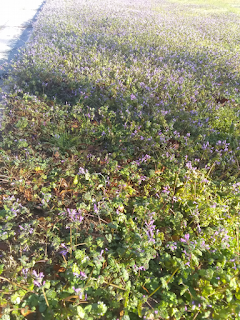
The 'Sheen of Color' that Henbit makes in late winter is visible even while driving by at 45 miles per hour. It's a shame such a pretty plant does not last longer.

Henbit is especially visible in late February and early March in the Sandhills of North Carolina.

Common Name: Henbit

Other Common Names: Common Henbit, Greater Henbit, Henbit Dead-Nettle,

Botanical Family: Lamiaceae (The Mint Family)

Botanical Latin Name: Lamium amplexicaule

Season to Harvest: Late Winter to Spring

Habitat: Henbit is most commonly found in lawns but can also be found in garden beds, vacant lots and, recently disturbed sites, it is very widely distributed in the United States.

Parts to Harvest: Leaves flowers and tender young stems if possible.

Poisonous Lookalikes: None

Related Edible Species: Red/Purple Deadnettle (L. purpureum). Purple Deadnettle looks exactly like Greater Henbit but, it’s leaves are less ‘henpecked’ looking, more heart shaped and the leaves around the flowers have a definite purple coloration to them. In some places in the USA you may find both growing side by side and in forage cooking they are effectively interchangeable.

Description: Henbit is an annual herb that can get roughly 16 inches tall in ideal conditions and has a semi-sprawling habit. Since it is a member of the mint family there is the possibility its stems can take root where they touch bare soil however, normally it spreads over the tops of other plants. Overall the plant has slightly fuzzy leaves that have a lobed margin and these leaves clasp the stem. The name henbit likely derives from the leaves looking like they have been pecked heavily by a chicken due to the irregular leaf margins. The flowers can range from purple to pink and by late winter a lawn can have an impressive sheen of color due to henbit. The foliage of henbit depending on environmental conditions can vary in color from a bright medium green to a deep purple tinged green.

How to Harvest: Much like with edible forage such as Chickweed (Stellaria media) you can snip off stem segments or harvest the entire plant by pulling it up by the roots. There is one caveat to this however, Henbit is a member of the mint family and one of the earliest sources of pollen and nectar for pollinators in the winter and early spring so I advise only taking what you need and leaving some for the native bees and such.


Recipe: While you can add this forage green to a salad or pickle the new shoots here is my favorite recipe; 


Curried Henbit

4 Cups of Henbit foliage, tightly packed.

3 Tablespoons of butter

1 Teaspoon Curry Powder (the basic brown type)

2 Whole Cloves

¼ Teaspoon Cinnamon

2 Tablespoons of Flour

1 Cup of Sour Cream


Directions

1.      1. Wash the greens thoroughly with warm water; keep an eye out for foreign debris and dirt.

2.      2. Chop the greens finely and add to a Saucepan and cover the greens with water.

3.      3. Boil the greens for about 10 minutes or until they are soft enough for your preference.

4.      4. Separately melt the butter.

5.      5. Add the Curry powder, Cloves and Cinnamon to the melted Butter.

6.      6. Stir the Flour into the butter mixture and stir until smooth and sauce-like.

7.      7. Add ½ cup of water from the cooked greens to the butter mixture and stir until blended.

8.      8. Drain the remaining fluid from the cooked greens and add the greens to the butter mixture.

9.      9. Add the Sour Cream and stir until the consistency is even.

10  10. Simmer to cook off extra moisture (no more than 15 minutes)

11.  11. Serve over rice.


With all that garden goodness covered this is the part of the blog where I have to advertise for the Fayetteville City Market. Now I know you readers probably don’t much like advertisements, but by booth at the City Market helps to cover the costs of running the test garden and literally maintains the Research & Development budget that is used to bring you the information that has made up the backbone of this blog.  In addition to being able to process card payments we now take CashApp payments so your payment options for my product have tripled. With that said, if you want to get some GMO-free, Organic fruit, herbs, flowers and perennials, come on down to the Fayetteville City Market on 325 Maxwell Street in downtown Fayetteville between the Hours of 9:00 am and 1:00 pm on Saturdays. Even in bad weather the market goes on though you might have to look for me under the ‘arches’ of the Transportation Museum’s front entryway.


For those of you wondering what plants are going to be at the market this weekend here is the list.


Produce:

Garlic Bulb, $1.00

Soup Kit – Parsnip, $6.00

Soup Kit – Turnip, $6.00

Seasoning Packet, $2.00


Houseplants:

Assorted Succulents, Plastic Pot ($5.00)

Assorted Succulents, Round Resin Pot - $5.00

Assorted Succulents, Square Resin Pot - $5.00

Assorted Succulents, Hexagon Resin Pot - $10.00

Assorted Succulents, Lattice Resin Pot - $12.00

Assorted Succulents, Bomber Resin Pot - $15.00

Assorted Succulents, Clay Pot ($9.00)


Garden Stuff:

Elephant Garlic

Softneck Garlic

Lettuce – Parris Island Romaine

Lettuce – Cherokee Red

Lettuce – Five Star Lettuce Mix

Beets – Bull’s Blood

Mustard – Red Giant


Coming Soon:

Okinawa Spinach

Flowering Maple


How to stay in Contact with Us!


Our group’s online presence has migrated to Nextdoor.com. All you need to keep up with all our activities is to have a Nextdoor account and to look for the ‘Sustainable Neighbors of Fayetteville’ group and ask to join! You don’t have to live in Fayetteville to join us! Feel free to ask all your garden questions of our knowledgeable membership and post your cool garden pictures.


https://nextdoor.com/g/ybvdm226x/?is=nav_bar


Also please take a gander at the Youtube version of this blog:


The Videos: https://www.youtube.com/user/curacaovexxor/videos

>Newest videos (5): Chinese Money Plant, Red African Milk Bush, Pencil Cactus, Desert Rose, ‘Prehistoric’ Devils Backbone.


Meetings still going on! We now meet at LeClairs General Store on the First and Third Thursday of every month. Our next meeting is on March 18th between 5:30pm and 7:00pm. We are in the back room so come on in and join us for a fun garden chat.