Showing posts with label Cosmetic. Show all posts

Sunday, August 25, 2019

Stellar Garden Performances


Welcome back to another episode of Lost in the Farmers Market. I know this episode was supposed to be posted on Friday the 23rd, but recent events have pushed it back a day or two and I will be covering that series of events after I cover the main topic. This week’s topic is another plant family that never gets enough credit. The family I am talking about has family members used as medicine, food, oils, pesticides, biochemicals and many members that are just there for good looks. This week I am taking a look at the Aster Family, known in Latin as Asteraceae. The word Asteraceae is from the Latin word Aster which means star. This is a clear reference to the shape of its flowers and their round array of petals. The flowers are of note because when we see a Daisy, we think that the whole flower head is the flower, when biologically the petals are just modified leaves and the actual center of the daisy flower (aka the disk) is actually a tightly packed group of tiny individual flowers each with their own tiny petals. This feature is critical to identifying aster family members regardless of what country you are in. Literally there is a aster for every hardiness zone which makes these plants flexible as hell.

Tagetes erecta - American Marigold
I know what you are thinking, ‘Ok, what about those uses you mentioned?” Well that’s easy there are groups of asters you see all the time at the grocery store as food.  The easy cop-out there is to mention Sunflower seeds, but did you know that Lettuce, Escarole, Endive, Chicory, Dandelion greens and, Frisee are all in the aster family and sitting right there in the salad aisle. Additionally, there is the edible tubers of Jarusalem Artichoke to consider as they are also in the aster family. As for herbs the aster family is well represented with plants like Santolina, Coneflower, Arnica, Burdock, Calendula, German Chamomile, Roman Chamomile, Costmary, Elecampane, Feverfew, Tansy, Goldenrod, Mugwort, Tarragon, Wormwood, Safflower, Southernwood and, Yarrow. So yes, the Asters are heavily represented in the herbal/culinary seasoning department. As for oil extraction Sunflowers and Calendulas are both primary sources of cooking oil. In terms of bio-chemicals such as medicine, and pesticides The Painted Daisy and the Pyrethrum Daisy are both sources of the insecticide Pyrethrum, while Extracts from the Narrow-leaf Coneflower are used as a memory enhancer…provided you remember to take them.
 
Echinacea purpurea 'Cheyenne Red' - Coneflower.

Interestingly, in terms of good looks there’s an aster to suit your fancy. Asters come in virtually any color imaginable; if you want blues and purples, Stoke’s aster, Pincushin flower and purple coneflower are your best bet. If you want reds and pinks, Chrysanthemums, Coneflowers, Gaillardia, Cosmos and, Zinnias are a good call. Yellows and oranges are easy also as you can pick and choose between Sunflowers, Tithonia, Gazinia, Marigolds, Calendula, Rudbeckia, Coreopsis, Echibeckia, Zinnias (again) and, Cosmos.  Green flowers are not off limits thanks to strange coneflower breeds like ‘Green Twister’, ‘Irish Eyes’ Rudbeckia, ‘Green Envy’ Zinnias and a few others. White blooming asters are incredibly easy to find but here are a few not previously listed, Oxeye Daisy, Shasta Daisy, Chamomile and, Cape Daisy.

 
Rudbeckia lacinata - Cutleaf Coneflower

As an interesting cultural note, members of the Aster family thrive in most soil conditions, while things like Coneflowers, Pyrethrum Daisies and Gazinia prefer well-drained soil with good organic content and regular water, plants like Helianthis angustifolius or Rudbeckia lacinata Swamp sunflower and Cutleaf Coneflower respectively will grow right beside a stream and don’t mind wet roots. Plants like Tithonia diversifolia (Mexican sunflower), Helenium autumnale (Sneezeweed) can handle sandy dry soils but do their best with extra water and enriched soil. Zinnias, Marigolds and Coreopsis all once established need little to no assistance to survive. So, your options are wide open when it comes to the aster family, as there is a specimen for all your needs, heck you might discover something about one of them that could make you a fortune.

 
Rudbeckia maxima - Giant Coneflower

Now with the topic of asters covered let us move on to why this post was delayed. In the middle of last week, I was sent a photograph via text by Marsha Howe from Sustainable Neighbors of a mysterious plant that needed identification. At a first glance I thought it to be a member of the hibiscus family due to the growth rate and unique leaves. For those who don’t know, certain species of hibiscus such as Okra, Cotton, Roselle, South Sea Salad Tree and the swamp mallows can grow several feet in a growing season easily so rapid growth is expected. Additionally, a lot of Hibiscus family members have large exaggerated palmate shaped leaves. As fluke would have it something told me I should look up a specific species of tropical fruits and much to my surprise the plant pictured below was precisely identified.

 
Carica papaya ‘Maradol’ – Maridol Papaya
Well it turns out the plant was a papaya, and was the largest specimen out of about two-dozen volunteer seedlings and plants. Now I know what you might be thinking, how the heck did Papaya plants get there, those shouldn’t be growing in our climate at all! This is true however Marsha told me that she had added some of her kitchen scraps to the compost at the site and that she had some Papaya leftovers from eating the fruit in there. The seeds germinated within the last month or two and thus all the volunteers. So I asked if it was ok to rescue some of the volunteers and try to grow the plants and see if something special could be done. Marsha was ok with this, and we met on Thursday afternoon so I could see the site and collect a few Papaya volunteers. A bit later I ended up with eight plants of varied sizes as you can see below.
 
The largest one is in a half-gallon nursery pot.
Growing a papaya isn’t exactly easy as the plants are recommended for zones 10 and 11 according to the USDA. In zones 8b (Fayetteville) and 9, they are recommended as being grown as ornamental plants. This is because cold temperatures below 59 F can prevent the tree from properly flowering or forming fruit. Temperatures below 32 F can cause heavy damage to plants while overnight freezes can kill plants outright. As if this were not enough, they are prone to spider mites when kept indoors and need a loamy well drained soil and may require a 21-0-0 or nitrogen heavy fertilizer during the first few months after planting or transplanting.  They also according to numerous sources start stressing when the temperature peaks above 90 F so they have an upper limit on the level of heat they will accept. As a last note it is suggested that for optimum fruit formation Papayas need 4” of rain per month after fruit as formed. Either way, I’m hoping the eight specimens I have do well enough, though I admittedly don’t exactly have a complete plan for them yet. You can bet there will be updates as the Great Papaya Trial continues.


With all that garden goodness covered this is the part of the blog where I have to advertise for the Fayetteville City Market. Now I know you readers probably don’t much like advertisements, but by booth at the City Market helps to cover the costs of running the test garden and literally maintains the Research & Development budget that is used to bring you the information that has made up the backbone of this blog. Also, as of the start of 2019, my booth can now process credit or debit cards thanks to the acquisition of s a Square reader so your payment options have doubled. With that said, if you want to get some GMO-free, Organic vegetables, herbs and fruiting shrubs come on down to the Fayetteville City Market on 325 Maxwell Street in downtown Fayetteville between the Hours of 9:00 am and 1:00 pm on Saturdays. Even in bad weather the market goes on though you might have to look for me under the ‘arches’ of the Transportation Museum’s front entryway.

Plants & Stuff Available Now:

Herbs:
Rue, Marbled 3” - $4.00
Sage, Common 3”: - $3.00
Santolina, Etruscan: 5” - $6.00
Santolina, Etruscan: 3” - $4.00
Valerian: 3” - $3.00

Flowers:
Butterfly Weed: 4” - $4.00
Common Mallow ‘Zebrina’: 3” – $4.00
Coneflower, Feeling Pink: 3” - $4.00
Coneflower, Pow Wow White: 3” – $4.00
Coneflower ‘Green Twister’: 3” – $4.00
Coral Bells, ‘Marvelous Marble’ 4.5” - $5.00
Foxglove, Camelot Lavender: 3” – $3.00
Foxglove, Camelot Rose: 3” – $3.00
Rose Mallow ‘Luna Red’: 3” – $4.00
Rose Mallow ‘Disco Belle Pink’: 3” – $3.00
Rose Mallow ‘Disco Belle White’: 3” – $3.00
Salvia, New Dimension Blue: 5” - $6.00

Fruits & Vegetables:
Peppers, Ornamental ‘Black Magic’: 4” - $4.00
Peppers, Ghost: 4”- $3.00

Coming Soon:
[TBA]
These days I am generally at Leclair’s General Store once a week, for the weekly Sustainable Neighbors meeting at 5:30pm through 7:00 pm. If you have questions then I will be there to answer your questions. Since our meetings have an open-door policy you don’t need to sign up for anything or join anything, you can come on in ask for us and join the meetings. If not, you can always send me questions through this blog or visit the farmer’s market or pay attention to what Sustainable Neighbors is doing at the link below.

https://www.meetup.com/SustainableNeighbors/

                        This brings to a close the seventeenth LITFM post of the year, stay tuned the next episode which should be posted on the 6th of September. There will be more garden updates and other cool stuff.

Monday, March 12, 2018

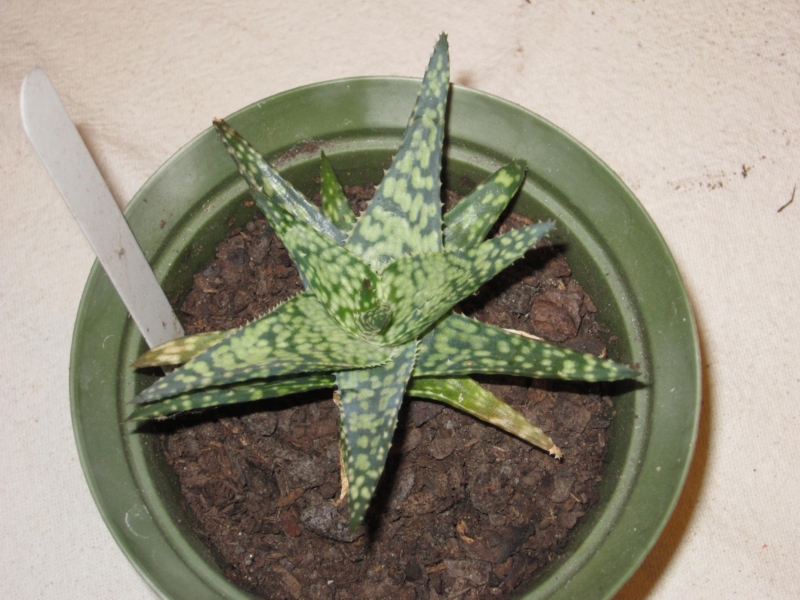
A Profile In Diversity: Aloes


            Welcome back to another episode of Lost In The Farmer’s Market, where we take a look into varied topics regarding sustainability, horticulture and organic practices.  This blog post was delayed, but for a good reason. On Saturday the 10th the ‘Build a better Block’ festival was held on the 1200 block of Haymount in town. Since I’m a supporter of all things local I was present and accounted for at the event after the usual Fayetteville City Market. In case you don’t know about the event, the event organizers altered traffic patterns made extra pedestrian and bike paths, had live music, five food trucks and all kinds of festivities. It was a hell of an event, and I hope they do another in the fall or next spring. But due to my work with Leclair’s General store, I had to squeeze a lot of work into just a few days so I was too busy to organize this post for the 8th as planned. Of course, Sunday I was visiting coma-land so this update does arrive late but there is a good reason for it and I hope you will all understand. Before we dive into this week’s topic, I should warn all of you readers in the Fayetteville area, we apparently have several extremely cold nights coming up. Tonight (Monday the 12th) it is supposed to dip down to 34 degrees, Tuesday it is supposed to reach 32 degrees and Wednesday it is supposed to hit 30 degrees. Now we all know that things are in bud right now or have broken bud, if you cannot bring it in or put as tarp over it I advise that if you didn’t get rain today thoroughly water it. Desiccation is a primary vector for frost damage and protecting your plants may be necessary depending on your own micro-climate.

            Now, speaking of things that don’t tolerate frost at all; today’s topic is a look into the diversity of the Aloe family. The first thing you should know is that there are three primary branches on the aloe family tree. The two closest relatives are the Gasteria and Haworthia groups who are both so closely related to aloes that they can cross-pollenate and produce viable offspring with traits of both parents. This post isn’t covering the Gasteria or Haworthia groups as that might be a topic for a later set of posts. As I noted earlier Aloes and frost do not mix, and even the most durable aloe still will suffer potentially serious damage if expose directly to temperatures under 32 degrees. The whole business of ‘watering before a frost to limit desiccation’ schtick may not work with aloes because cold and wet soil is a formula for root or crown rot. Beyond this, aloes are largely care free, they do not require a lot of water, barely any fertilizer and any basic potting soil is ok for them. Despite what a lot of plant guides, houseplant books and magazines claim, aloes generally do not need a special soil mixture if you are only watering them when absolutely dry and then only as absolutely necessary. From what I can tell the additional organic matter found in a basic potting soil mix seems to encourage more aggressive root growth which is a good thing. I do not advise using a potting soil that has fertilizer incorporated into it as that could promote growth at the wrong time of the year that you have no control over.  Likewise, because I get the question very often, potting soil is a very specific product, it is not the same as garden soil, topsoil, compost or seeding soil. Potting soil tends to have a noticeable amount of perlite, peat moss the occasional but of bark or wood chips and generally is blended to be light weight. The blend of potting soil is geared for weight and moisture retention because it’s expected to be used in conjunction with potted plants which by definition you may need to pick up and move from time to time. Cactus soil is nothing more than a very sand-heavy version of potting or top soil that does not hold moisture very well and is practically designed to be nutrient deficient which is why some come with encapsulated fertilizer products mixed in. Besides, you can get a 2.8 cubic foot bag (79 liters/about 30 lbs) of potting soil for 13.00 before tax at a garden center whereas you generally can only get an 8 quart bag of miracle-gro cactus soil for $4.77 so of course if you must add sand it’s cheaper to get the bigger bag, then add sand as needed. Obviously, Miracle-Gro does not make products that are by any definition of the term sustainable, or organic which is why you will never see me shilling for them anywhere. But comparing the costs here for $20.00 I get just shy of 31 liters (32 quarts) of the cactus soil, whereas with the big bag I get 79 quarts and can buy a 50lb bag of coarse sand for $5.00 and still it costs slightly less than $20.00 after taxes. There is no economic advantage to miracle-gro products nor pre-made cactus mix.

            Getting back on track, aloes are fairly tolerant and can take full sun however, you must gradually introduce them to it as they can scorch if you just toss them out in the full sun. During the summer I often get queries regarding why someone’s aloe is now a funny color, and most of the time the Aloe’s natural protection against full sun has come into play and it’s a got a faint reddish-orange color. This is the Aloes way of blocking certain wavelengths of light and increasing its resistance against being in the sun. It is a neat but temporary defense mechanism for the warm months but aloes go back to their normal green colors over the cold months. But, let’s talk about some actual aloe specimens.

Aloe vera – Medicinal Aloe
            Aloe Vera is the true medicinal aloe that is commonly grown for use in beverages and in some skin care products. The other aloe grown for the purpose is Blue aloe or Aloe glauca which is more commonly called cosmetic aloe and it is more commonly found in skincare products. In general, all Aloe plants have gel but the overall quality and quantity of gel varies widely. I always recommend that anyone who intends to take aloe internally should consult credible publications on its use as well as a credible practitioner of herbal medicine just to make sure there are no biological interactions that could send you to the emergency room. In terms of care aloe vera is very uncomplicated, it can grow well in a variety of lighting conditions but generally prefers partial sun or bright filtered light. It can take full sun (8+ hours) but you need to slowly introduce it to that lighting condition so there is no leaf scorch. Aloe vera prefers its soil on the dry side and does fine in normal potting soil as long as you allow the soil to completely dry out after you last watered it.  As a final note and this applies to most if not all aloes; aloes do not need to be frequently repotted and are more likely to produce offshoots and blooms when they are pot bound. The pictured example was only moved into the 14” pot you see after it became so root bound that the above ground part of the plant always weighed more than the below-ground parts of the plant so it would constantly need support and topple over.

As a final note, true medicinal aloe has an incredible number of botanical Latin names that are considered synonyms. Aloe Vera is the current accepted name, but it is also known by the following names in some publications; Aloe barbadensis, Aloe barbadensis var. chinensis, Aloe elongata, Aloe flava, Aloe indica, Aloe lanzae, Aloe maculata, Aloe perfoliata, Aloe rubescens, Aloe variegata, Aloe vera var. chinenesis, Aloe vera var. lanzae, Aloe vera var. littoralis and, Aloe vulgaris. So, in short will the real aloe vera please stand up?

 
Aloe melancantha var. erinacea – Goree Aloe
            This is a strange little hybrid, it’s apparently super-slow growing, rare and is from the more arid parts of Nambia where it is called “Goree”. This succulent is considered a sister species to Aloe Melanacantha which is similar but often noted to be larger and is from the Namaqualand areas of the western parts of south Africa. Now with that said, the biggest threat to this species is habitat loss and illegal collecting. Given how interesting this small specimen looks and what internet searches have indicated it looks like at a larger size the desire for it is understandable.

 
Aloe ellenbeckii – “Fat-Leaf Aloe”
            This aloe is also known as Aloe dumetorum in some botanical listings. I’ve taken to calling it ‘fat-leaf aloe’ because it’s leaves are almost cylindrical unlike the roughly D-shaped cross-section of Aloe vera leaves. I think that is this plant has similar medicinal or cosmetic properties to medicinal aloe or blue aloe it could be the next big thing for gel extraction.

 
Aloiampelos ciliaris – Climbing Aloe
            I admit my specimen got the crap kicked out of it this winter, but it’s holding on and seems to be recovering somewhat. Climbing aloe has a growth habit at odds with other aloes in that it grows from a central stem upright at a rate that you can easily see over the course of several months. This makes it one of the fastest growing aloes I’ve ever seen though it lacks in the gel department so that’s an odd trade-off. This aloe was formerly known as Aloe ciliaris but the name was changed within the last year or two for some reason.

 
Aloe descoingsii – Miniature Aloe
            I’ve had this aloe in the collection for several years and it started as a single stem plant then expanded into a colony. This was the first true clustering aloe I’ve ever owned and it seems to be immune to a lot. I suspect this aloe escaped damage because the geometry of its leaves and its clustering habit controls airflow which prevents frost from doing much damage. I’m not sure testing this theory outside the green house is particularly wise.

 
Aloe quicksilver x rare flare – Silver Ridge Aloe
            This aloe seems to break with normal care instructions for aloes as every few years it has a fair amount of dieback and then regenerates itself. With that said it is a clustering type that offsets readily and really only requires occasional watering.

 
Aloe hybrid – Grassy Lassie Aloe
            Labelled for Zones 8-11, it seems to be a hit or miss proposition in Fayetteville North Carolina. Given the three weeks of very cold temperatures that started in the last week of December 2017 and wrapped around into January 2018, I don’t think this aloe would have made it in the ground. However, as an indoor plant for the winter and an outdoor display for the summer it should be just fine. This plant tried to bloom back in January but the flower stalks were frosted off. I should note that there is little gel in this succulent’s leaves.

 
Aloe hybrid – Christmas Carol Aloe
            I have offered a few of this hybrid through LeClair’s general store and its uniquely textured leaves and coloration captivated succulent and cacti enthusiasts who saw it. This specimen was given to me by a vendor at the Fayetteville city market as a small offset and well it’s still small but it’s got room to grow.

 
Aloe deltoideodonta – ‘Checkerboard Aloe’
            This variety of aloe doesn’t have a common name so instead of confusing customers with its Latin name I came up with the name ‘Checkerboard Aloe’ because the white dots on the leaves are somewhat square shaped and admittedly a 1984 song about playing chess was on the radio at the time and the common name was born. This aloe has been popular since day one, the big wide leaves, the odd variegation pattern and the fact that older specimens like the one pictured can curl their leaves down over the pot’s rim make it unique.

 
Aloe hybrid – Snowstorm Aloe
            This little succulent is an offset from a much larger plant that was a special order. The white patterning on the leaves makes it interesting to look at while it unlike a lot of decorative aloes has relatively thick gel-filled leaves. This means that it may have some medical uses if you need it, and if not in a dark ceramic pot it’s a conversation starter.

 
Aloe hybrid – Minnie Belle
            For months I was calling this one ‘Minnie Ball’  which is literally the name of the projectile fired out of muskets during the American Civil War. Then I went to research this aloe’s bloom colors and found out the error…fortunately Minnie belle sounds like a character from ‘Gone with the Wind’ so it made for a minor change and in a military town the change didn’t hurt sales. Minnie Belle Aloes are generally single-stem and with age as older leaves fall off or are removed they end up with a palm tree look which with decorative gravel can be quite striking. None of the specimens I’ve sold or the one picture have demonstrated any ability to side-branch or produce offsets thus far which makes it a bit like the Climbing Aloe in form but slower growing.

 
Aloe Striata – Coral Aloe
            For note this isn’t my photo, I lost my specimen plant during the big 2018 freeze in January. The picture above is from StrictlyMedicinalSeeds.com and is the best representative of Aloe striata that one might buy at a nursery. This plant is structurally pleasing because it’s leaves are oppositely placed and can curl a bit giving a nice form that is a bit random as no two plants do the same exact thing. The variegation on this succulent consists of glaucous blue-green leaves with a white line with red tinges running down the leaf margins. Its bloom is where it gets its name as the flowers are tubular and bright Coral-pink and are on stems that can be up to two feet long.
 
Aloe hybrid -  T-Rex
            Speaking of Aloes with issues, this hybrid was bought on discount at a garden center early last year and I think I know why it was on discount. T-rex aloe despite its macho name tends to get root rot at the drop of a hat for no real good reason. Look at it really hard, root rot, sneeze near it, root rot, observe the air speed velocity of an unladen swallow and you guessed it root rot. However, this specimen seems to have ignored frost damage thus far and seems to be in good health so maybe it was just what they did to it at the garden center. Honestly, at this rate I may have to get an anatomically correct doll depicting a succulent and hold it out near this aloe to find out where the bad men at the garden center touched this plant. Joke aside, thus far the basic aloe rules of care seem to apply but with even less watering requirements.
 
Gasteria x Aloe hybrid – Midnight Aloe
            Technically a gasteria-aloe hybrid is called ‘x Gasteraloe’ or some such, but I would imagine that is confusing to the average reader of this blog so it’s simpler to use the standard indicator of a cross between two plants via pollen transfer. Generally speaking in the plant world, a hybrid is created through a transfer of pollen or assisted sexual reproduction which sets it apart from plants created through genetic manipulation or GMO plants. I have this plant here because I mentioned earlier that Gasteria, Haworthia and Aloe are so closely related that they can produce hybrids and Midnight aloe is one that resembles aloes enough that it’s common name ignores that it is a hybrid.
 
Aloe hybrid – Walmsley’s Bronze Aloe
            Walmsley’s Bronze aloe is the harder to find of the two popular Walmsley aloe hybrids. The other is Walmsley’s Blue aloe and that can be found intermittently in garden centers fairly easy. In terms of care it basically needs to be treated like an Aloe vera, but with the proviso that it is a little bit more susceptible to root rot and that it’s color may make it more resistant to scorching in full sun
 
Aloe hybrid – Silver Star Aloe
            Silver star aloe is similar to silver ridge aloe and may be related directly to one of its parents. This aloe has a similar form and growing habit to silver ridge but it’s white coloration is more pronounced and it seems more prone to root rot and or random stem dieback. Otherwise this aloe is fairly easy to deal with.


This brings to a close the first post of March 2018 and a decent look at the biology, growing habits and nature of the Aloe family. For note this is where the advertising starts because it keeps the Test Garden’s supplied. As always barring terribly wet and cold weather or illness I still manage a vendor’s space at the Fayetteville City Market at 325 Maxwell street between 9:00 am and 1:00 pm on Saturdays. I sell several things during the winter/early spring months and they are:

Fresh Foods:
Soup Kits, with Turnips - $6.00
Soup Kits, with Parsnips - $6.00
Whole Garlic –  $1.00
Fresh Ginger, 3.0+ ounce bags - $2.00 each or three for $5.00

Plants Available Now:
Parris Island Romaine Lettuce – $3.00
Lacinato/Dinosaur Kale – $3.00
Italian Parsley – $3.00
Spinach, Nobel - $3.00
Kohlrabi, Purple Vienna - $3.00
Chives - $3.00
Tansy - $3.00

Coming Soon:
Basil, Sweet Genovese (in April)
Burnet (a perennial herb that adds flavor to salads)
Swiss Chard
Redbor Kale (a kale so curly and crimson that it will make the neighbors jealous)
English Thyme
Sage
Winter Savory
Lavender (several types)
Santolina (aka Lavender-Cotton)

If the market isn’t your thing or your schedule does not allow you to go there my premium exotic house plants can be purchased in attractive clay pots with unique embellishments at LeClair’s General Store. LeClair’s General Store is located on 1212 Fort Bragg Road in Fayetteville North Carolina.

This is their Facebook Page:

Most recent deliveries to Leclairs:
1x Terrarium - Blue Torch cactus, Pilosocereus azureus.
1x Terrarium - Tiger Jaw Plant, Faucaria tigrina.
1x Terrarium - Miniature Arrowhead Vine, Syngonium podophyllum ‘mini pixie’.
2x 7.5” Rimless pot - Spider Plant, Chlorophytum cosmosum.
1x 4” Standard clay pot - String of Pearls, Senecino rowleyanus.
1x 4” Standard Clay Pot - Chinese Evergreen, Agaonema species ‘maria’.
3x 5” Rimless Pot - Tree Philodendron, Philodendron selloum.

These days I am generally at the store at least twice a week, maintaining stock and/or delivering new materials so if you go to visit the store there is a fair chance I’ll be present to answer your questions. If not, you can always send me questions through this blog or visit the farmer’s market or pay attention to what Sustainable Neighbors is doing at the link below.


            This brings to a close the fifth LITFM post of the new year, stay tuned the next episode which should be posted on the 22nd of March. The topic will be: A Profile In Diversity: The Prickly Pear Family. The next post will be the last in the winter of 2018 diversity series and after it LITFM will return to a weekly outdoor garden topic format for the growing season, thank you for sticking with us and stay tuned for some cool garden topics.